|
Questions and answers about Executive Order 14247:
|


Beginning January 2025, a convenience fee will apply to all credit card payments. ACH (Echeck) payments and checks can continue to be used with no convenience fee.We now accept ACH (Echeck) payments through our website under the payment portal. Invoices can be paid on our website at www.kvlsmcpa.com by ACH and credit card. Checks can be mailed to us at our office at KVLSM LLP, 415 Crossways Park Dr. Suite C, Woodbury, NY 11797. |
WATCH OUR FIRM VIDEO
|
MORE TAX & FINANCIAL NEWS YOU CAN USE |
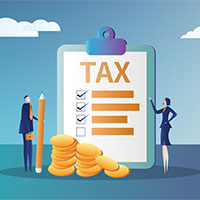
Your Ultimate Tax Filing Checklist
A smooth tax filing experience starts before your return is prepared. This checklist gives you a simple, practical way to gather all your tax information.
|
|

Save for Retirement, Reduce Your Tax Bills
One simple step can lower your tax bill and boost your retirement savings. The actions you take today to prepare for retirement will influence your financial situation in later years.
|
|

Tax Credits For New Retirement Plans
Small businesses can significantly benefit from tax incentives that encourage the creation of employee retirement plans.
|
|

Making Charitable Contributions in 2026
OBBBA introduced several significant changes for individuals who deduct charitable contributions.
|
|
SERVICES
- Income Tax Preparation for all types of businesses and individuals
- IRS, State and Local Audit Representation
- Trust, Estate and Gift Compliance
- QuickBooks setup, support and training
- Business startup services
- Monthly bookkeeping
- Financial statements
- Family Office
- Nonprofit Administration
RECENT E-NEWSLETTERS
FEBUARY 2026 Q & A
Q: What's the difference between a single-member LLC and an S-Corp?
A: A single-member LLC is taxed as a sole proprietorship by default: all profits are subject to 15.3% self-employment tax. An S-Corp, however, allows the owner to pay themselves a reasonable salary (subject to payroll taxes) while taking the remaining profits as taxfree distributions. This split can save thousands in taxes once profits exceed about $50–60k annually.
The trade-off? S-Corps require formal payroll, annual filings, and stricter IRS rules, making them a better option for higher-earning businesses seeking tax efficiency.
SHORT BITS |
Deductions and Credits
Small businesses have unique characteristics and needs. Hence, the IRS has some tax provisions that are designed for or may be particularly beneficial to smaller companies. Let's take a look one in particular.
BONUS DEPRECIATION
Businesses must generally write off the costs of assets over their "useful life"— a set number of years based on the kind of asset. With bonus depreciation, businesses can immediately deduct those costs, subject to certain limits.
Under the TCJA, 100% bonus depreciation was only allowed through 2022, subject to a phaseout that would allow a deduction for 80% of costs in 2023 and 60% in 2024.
Under OBBBA, the 100% bonus depreciation provision is made permanent.
Can You Claim These Non-Itemized Deductions?
OBBBA also introduced several deductions for 2026 that you can claim in addition to the standard deduction without having to itemize your deductions.
Charitable Contributions. This permanent deduction lets you claim up to $2,000 (married filing jointly) or $1,000 (single) in cash qualified charitable deductions.
Student Loan Interest of up to $2,500 remains deductible in 2026, with a phase-out between $170,000 and $200,000 MAGI for joint filers and between $85,000 and $100,000 for single filers. However, starting with the 2026 tax year, forgiven student loan debt generally becomes taxable income again.
Vehicle Loan Interest of up to $10,000 a year can be deducted, effective for 2025 through 2028. You must purchase the vehicle for personal use and meet other eligibility criteria.
Additional Deduction for Seniors. If you're age 65 or older, you're eligible for an additional deduction of $6,000 (single) or $12,000 (married filing jointly). The deduction phases out for taxpayers with income over $75,000 (single) and $150,000 (married filing jointly).
Qualified Tips. For tax years 2025 through 2028, you can deduct up to $25,000 in tips received. To qualify, these tips must be received in occupations that customarily and regularly receive tips. The deduction phases out for single taxpayers with modified adjusted gross income (MAGI) over $150,000 and married couples (filing jointly) with income over $300,000.
|
|
|
415 Crossways Park Dr. Suite C Woodbury, NY 11797 |



|
© 2026 KVLSM LLP - CERTIFIED PUBLIC ACCOUNTANTS AND ADVISORS - NEW YORK This e-mail and any attachments are intended exclusively for the individual or entity to which it is addressed. It may be confidential or legally privileged. If you received this message in error or are not the intended recipient, you should destroy the e-mail message and any attachments or copies, and you are prohibited from retaining, distributing, disclosing or using any information contained herein. Please inform us of the erroneous delivery by return e-mail. Thank you for your cooperation. |